The Future of Cybersecurity 2025: Top Threats, Rising Trends & High-Paying Career Paths
Cybersecurity is no longer an optional IT function—it is the most critical global necessity for every organization.
In 2025, cyberattacks are growing exponentially, fueled by the misuse of AI, advanced automation, and the global shift to cloud-based systems. The result? A massive talent shortage. With more than
4 million cybersecurity jobs unfilled worldwide, this is the perfect moment to enter a high-demand, high-salary career.
This blog cuts through the noise. You’ll learn exactly what threats you will be hired to fight, which technologies you must master, and the step-by-step path to launch your cybersecurity career right now.
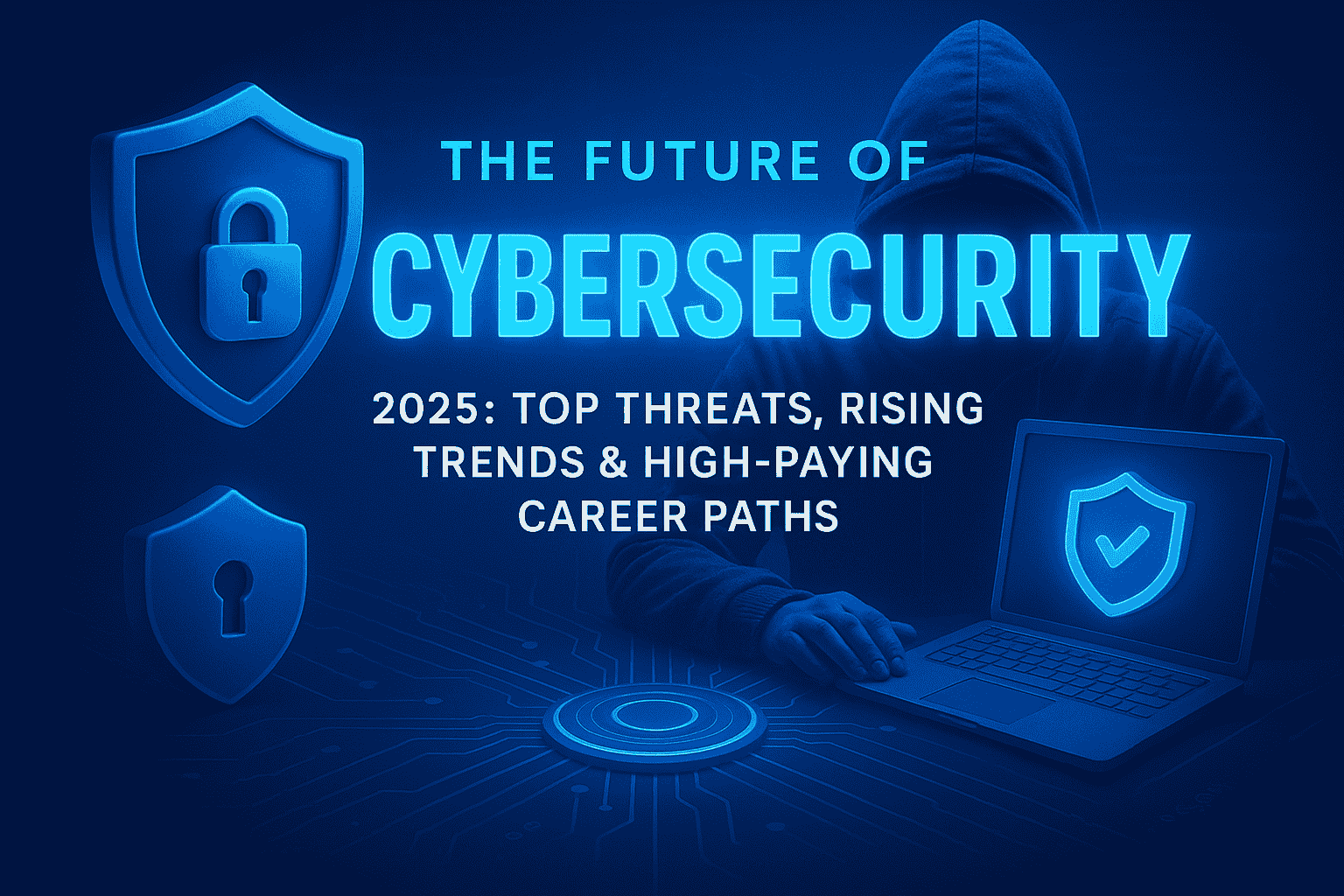
Threats, Skills & Career Growth in Cybersecurity 2025
1. The Evolving Threat Landscape: What You’ll Be Fighting in 2025
The attacks of today are sophisticated, AI-driven, and designed to bypass traditional defenses.
🤖 AI-Driven Attacks
Polymorphic malware, AI-powered phishing & automated credential cracking.
🧨 Ransomware 3.0
Double & triple extortion, targeting healthcare, BFSI & infrastructure.
☁️ Cloud Breaches
Misconfigurations, exposed keys & insider misuse in AWS/Azure/GCP.
1.1 The Rise of AI-Powered Cyber Attacks
Artificial Intelligence is now a weapon in the hands of cybercriminals. Hackers are using Gen-AI to:
-
Polymorphic malware:
Code that mutates automatically to evade signature-based detection.
-
Phishing 5.0:
Highly personalized, AI-written phishing campaigns that feel “human”.
-
Deepfake scams:
Voice and face cloning used to trick employees, families, and customers.
-
AI-driven brute force:
Smarter password guessing with pattern learning, not just random guesses.
1.2 Ransomware 3.0: Beyond Encryption
Ransomware has evolved into an industrialized ecosystem called
Ransomware-as-a-Service (RaaS).
-
Double extortion:
Attackers steal data first, then encrypt systems and demand payment.
-
Triple extortion:
Attackers threaten to leak data to customers, partners, or regulators.
-
Critical sectors:
Healthcare, BFSI, and national infrastructure are prime targets.
1.3 Cloud Security Incidents Are Exploding
As organizations move to AWS, Azure, and GCP, cloud misconfigurations have become the easiest way in for attackers.
-
Misconfigured storage:
Public S3 buckets or open storage containers exposing sensitive data.
-
Weak / stolen API keys:
Attackers gain full control over cloud resources.
-
Multi-cloud complexity:
Security gaps between different cloud providers.
-
Insider threats:
Privileged users misusing or leaking access.
Cloud security skills are now non-negotiable for every modern cybersecurity professional.
2. The Tech Trends Shaping Cyber Defense (Your Future Toolkit)
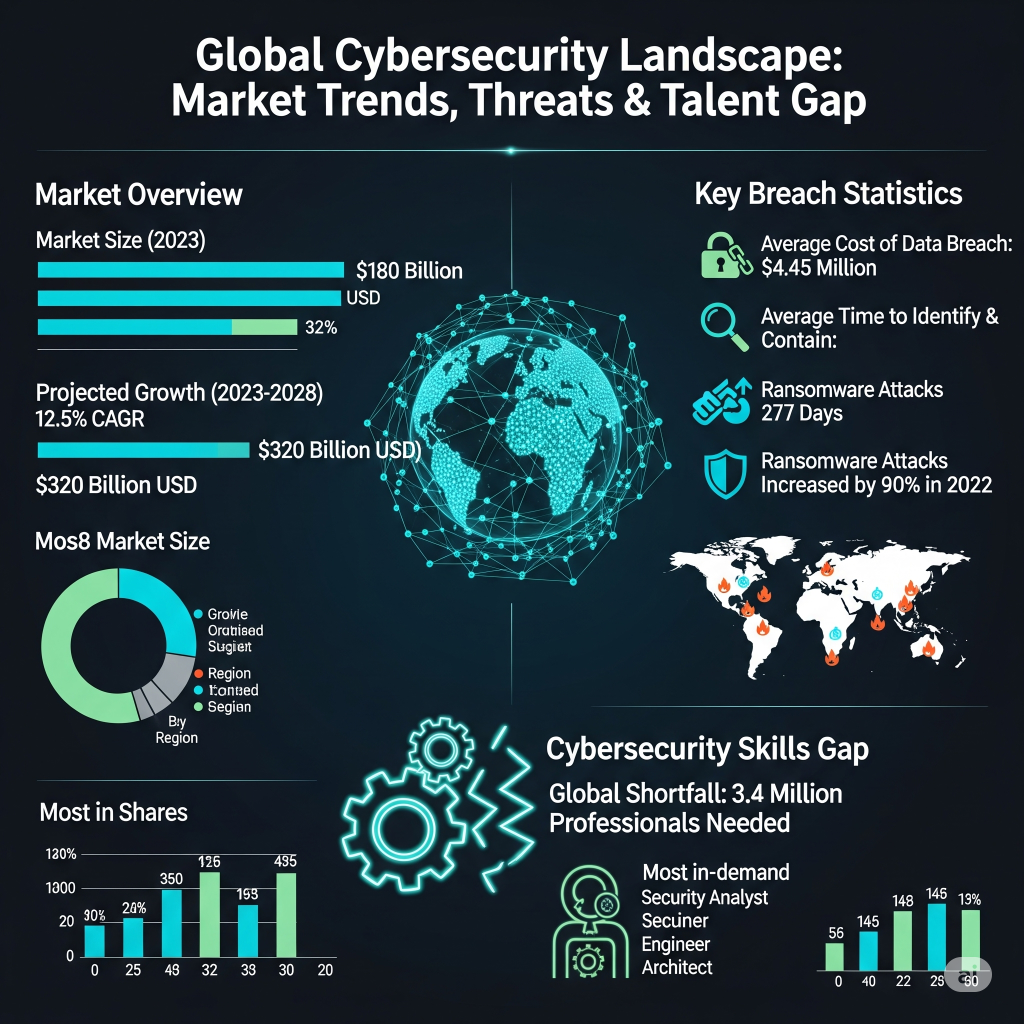
The good news? Cyber defense technology is evolving just as fast as the threats.
2.1 AI in Cyber Defense (Your Counter-Weapon)
Organizations are deploying AI/ML to counter AI-driven attacks. As a future cybersecurity professional, you will use AI for:
-
Real-time threat detection:
Spotting anomalies in traffic, behavior, and log files within milliseconds.
-
Predictive analysis:
Forecasting likely attack vectors based on historical patterns.
-
Automated response:
Isolating hosts, blocking IPs, and containing malware without manual intervention.
🔄 AI Defense Pipeline:
Logs ➜ Anomaly Detection ➜ Alert ➜ Automated Response ➜ Analyst Review
2.2 Zero Trust Architecture (ZTA) Becomes the Standard
The old idea of a “trusted internal network” is dead. Zero Trust says:
Never trust. Always verify.
Every user, device, and request must be authenticated continuously, no matter where it comes from.
Mastering Zero Trust Network Access (ZTNA) is now a core enterprise skill.
2.3 Passwordless Authentication Goes Mainstream
Passwords are the weakest link. The future of access control relies on:
-
Biometrics:
Fingerprint and Face ID-based authentication.
-
Passkeys & FIDO2 tokens:
Hardware-backed security keys for strong authentication.
-
SSO (Single Sign-On):
One secure login for multiple verified applications.
3. Essential Cybersecurity Skills to Master in 2025
To land one of the millions of available cybersecurity jobs, you must move past theory and focus on practical, hands-on skills.
| Category |
Must-Have Skill |
Why It’s Critical |
| Foundation |
Cloud Security (AWS/Azure/GCP) |
Securing the infrastructure of every modern company. |
| Offensive |
Ethical Hacking & Penetration Testing |
Finding vulnerabilities before attackers do. |
| Defensive |
Digital Forensics & Incident Response (DFIR) |
Containing, investigating, and recovering from breaches. |
| Operations |
SIEM & SOC Operations (Splunk, Sentinel) |
Real-time monitoring and analysis of security logs. |
| Niche |
IoT / OT Security |
Securing smart devices, factories, and critical infrastructure. |
Tools You Will Master (Hands-On Requirement)
Your training should give you practical exposure to industry-standard tools like:
-
BurpSuite:
Web application security testing.
-
Metasploit:
Exploitation and penetration testing framework.
-
Splunk / SIEM tools:
Log analysis and real-time alerting.
-
Wireshark:
Network packet analysis.
-
Nmap:
Network scanning and reconnaissance.
-
Kali Linux:
Full penetration testing OS with pre-installed tools.
Top Certifications for Career Boost
-
CompTIA Security+:
Ideal for beginners starting their cybersecurity journey.
-
CEH (Certified Ethical Hacker):
Validates your offensive security and hacking fundamentals.
-
OSCP:
Highly respected, hands-on Penetration Testing certification.
-
CISSP:
For experienced professionals moving into leadership and strategy roles.
4. Your Skillected Step-by-Step Cybersecurity Career Roadmap
Step 1: Build Core Foundations
Master TCP/IP, Linux, Networking, and Command Line. Skillected starts from the basics to ensure you have a rock-solid technical base before moving into specialized topics.
Step 2: Get Hands-On Practice
Practice ethical hacking on live, legal platforms like TryHackMe and Hack The Box. Skillected provides a dedicated virtual cyber lab for safe, practical learning and real-world projects.
Step 3: Specialize and Certify
Pick a high-demand track such as Cloud Security or Penetration Testing and pursue a top certification. Skillected maps your learning path to the skills needed for Security+ and CEH exams.
Step 4: Build a Strong Portfolio
Create real projects: Vulnerability Assessment Reports, Threat Intelligence Feeds, Log Analysis Dashboards, and Incident Response Playbooks. Skillected’s Capstone projects ensure you graduate with job-ready proof of your skills.
Step 5: Land Your First Job
Apply for roles like SOC Analyst L1 or Junior Cybersecurity Engineer. With Skillected’s dedicated career support, you’ll craft a resume that speaks the language of recruiters and showcases your hands-on expertise.
Cybersecurity in 2025 is a domain of critical necessity and incredible opportunity. With AI-powered threats rising and a global skills gap, organizations are willing to pay top dollar for trained professionals.
By focusing on the right tools, hands-on skills, and strategic certifications—and by following a structured roadmap like Skillected’s—you can secure a future-proof, high-impact career in cybersecurity.